
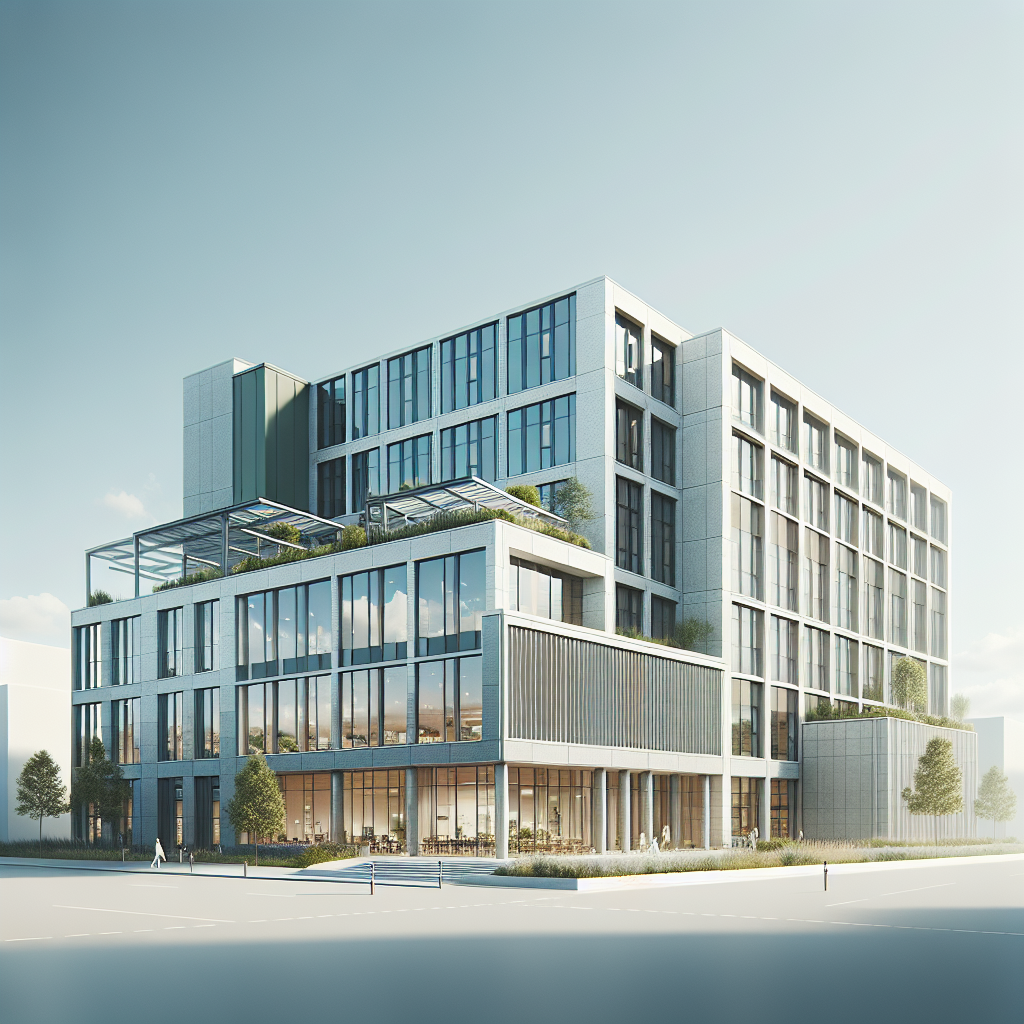
How sustainability is becoming a structural driver of real estate value
Across Europe, sustainability is no longer treated as an optional “quality label” for buildings. It is increasingly a set of measurable characteristics that affects how assets are financed, occupied, insured, renovated, and ultimately valued. For business owners, investors, and corporate decision-makers, the discussion has moved beyond intent to practical questions: which sustainability factors matter, how they translate into cash flows and risk, and how to plan capital expenditure over a multi-decade holding period.
This shift is visible in the way valuation professionals are being asked to incorporate energy performance, climate risks, and ESG real estate considerations into their work. A key implication is that sustainable buildings value is becoming less about a single “green premium” and more about avoiding future obsolescence, regulatory friction, and operational volatility.
Why regulation is accelerating the value impact of sustainable buildings
European policy is a central force behind the re-pricing of sustainability. The BUILD UP publication Sustainable buildings: the new real estate value describes how legislation, particularly the European Green Deal and the revised Energy Performance of Buildings Directive (EPBD), is having a direct effect on property markets by compelling professionals to account for energy performance, climate risk, and ESG factors.
For owners and long-term stewards of commercial and mixed-use assets, this matters because regulation tends to translate sustainability gaps into tangible constraints over time, such as:
- Higher retrofit pressure as minimum standards tighten and timelines become clearer
- Reduced leasing flexibility where poor energy performance becomes a barrier for corporate occupiers with reporting obligations
- Valuation uncertainty where future compliance costs and marketability become harder to ignore
In other words, sustainability is increasingly embedded in the “rules of the market,” not just in tenant preferences.
What “sustainable buildings value” means in practice: cash flows, risk, and liquidity
Value in real estate is primarily a function of expected cash flows and risk. Sustainability influences both sides of that equation, sometimes directly (e.g., operating expenses) and sometimes indirectly (e.g., vacancy risk, liquidity at exit).
Cash flow effects: operating costs and income resilience
Energy performance can affect tenant affordability and willingness to stay, particularly in energy-intensive uses or when utility costs become volatile. Sustainable features may support net operating income through lower operating expenditure and more stable occupancy.
Investor-focused analysis also points to mechanisms such as higher rental income in certain segments, reduced operating costs, and the potential for improved financing conditions for assets that are seen as lower risk due to sustainability characteristics, while noting the importance of comparable market evidence for valuations. See How Sustainability Impacts Real Estate Returns.
Risk effects: climate, regulation, and obsolescence
Sustainability is also being treated as a risk lens. This includes physical climate risks (such as flooding and heat stress) and transition risks (such as policy changes and shifting tenant requirements). Over time, these risks can influence insurance availability and cost, capex timing, and ultimately investor required returns.
From an ESG strategy perspective, stronger ESG performance is frequently associated with improved access to capital and a perception of lower long-term risk. Rimkus summarizes how regulatory pressure and reporting expectations can widen the value gap between buildings that can meet evolving standards and those that cannot: ESG in Real Estate: Strategies for Sustainable Value.
Liquidity effects: marketability and the “brown discount” logic
As sustainability features become standard expectations, buildings that lack them can face a “brown discount” dynamic: not necessarily because green buildings earn extraordinary premiums, but because inefficient or non-compliant buildings become harder to lease, finance, or sell without a clear capex plan.
CBRE’s research emphasizes that valuation practice is increasingly focused on interpreting ESG evidence and reflecting it logically in cash flows and discount rates, and suggests that modelling the cost of inaction can be as important as pursuing upside. See The Value of Sustainable Building Features (PDF).
How ESG real estate enters valuation: evolving methods and practical tools
A recurring challenge is that valuation depends on market evidence, and sustainability evidence has historically been inconsistent or difficult to compare. This is changing as reporting becomes more standardized and data availability improves, but the transition period creates complexity for owners, lenders, and valuers.
BUILD UP highlights a proposed two-tier valuation approach: an immediate layer focused on energy efficiency, and a second, more gradual layer incorporating broader sustainability factors such as ESG criteria and climate risk. This is intended as a practical way to navigate complexity while the market’s evidence base matures (source).
From a decision-maker’s standpoint, the implication is that sustainability should be captured in two ways:
- Current performance (what the building does today, especially energy use and operating outcomes)
- Future readiness (what the building is likely to require to remain compliant and competitive)
This dual perspective supports more robust capex planning and more defensible underwriting assumptions.
What evidence says about premiums, and why it should be interpreted carefully
Market participants often ask whether sustainability “pays.” The best available studies suggest that measurable premiums can exist, but they are not uniform across locations, asset types, or time periods.
CBRE’s Continental Europe research reports that office buildings with sustainability certification earned a modelled 6% rental premium versus non-certified peers after controlling for factors such as location and building characteristics. The same report notes evidence of yield effects in some logistics markets, while emphasizing that results vary and that certification is often used as a proxy for performance (CBRE PDF).
For long-term owners and investors, two cautions are important:
- Premiums may compress as sustainability features become more common and less differentiating
- Certification is not identical to performance; actual energy consumption and operational outcomes are increasingly relevant
In practice, sustainable buildings value is often best understood as a combination of modest upside potential and meaningful downside protection.
Practical implications for investors, tenants, and corporate decision-makers
For occupiers, sustainability intersects with workplace strategy, cost predictability, and reporting requirements. For investors and owners, it intersects with capital planning, financing, and asset resilience. The following considerations can help translate ESG real estate into actionable decision-making.
For investors and owners: underwriting and capex sequencing
- Plan upgrades around building lifecycle moments (façade renewals, HVAC replacement, major refurbishments) to reduce disruption and improve cost efficiency
- Use scenario-based thinking to test “do nothing” versus “upgrade” pathways, including potential regulatory tightening and energy price volatility
- Prioritize data quality because credible energy and carbon data increasingly supports valuation discussions and financing processes
For tenants and business leaders: operational outcomes and long-term occupancy risk
- Assess total occupancy cost, not just rent, including energy use intensity and building systems performance
- Consider workforce and wellbeing needs, as ESG frameworks increasingly include indoor environmental quality and occupant experience (see Rimkus)
- Align leasing decisions with reporting obligations where corporate sustainability reporting requires better building data and performance transparency
A long-term perspective: sustainability as a component of asset durability
For long-term-oriented real estate owners, sustainability is best approached as an element of durability: the capacity of an asset to remain functional, financeable, and attractive across multiple market cycles. The BUILD UP analysis concludes that sustainability is becoming a structural dimension of real estate value, requiring professionals to update methods and take an active role in the ecological transition of the built environment (source).
Over time, the market is likely to reward clarity: assets with transparent performance data, credible transition plans, and resilience measures should be easier to position in leasing and capital markets than assets where sustainability risks are unknown or deferred.
Conclusion
Sustainability is increasingly shaping how commercial real estate is valued, not only through potential pricing premiums but through its influence on energy performance, regulatory readiness, climate risk exposure, and liquidity. European policy developments such as the European Green Deal and the revised EPBD are accelerating this shift, while valuation practice is adapting through approaches that account for both near-term energy efficiency and broader ESG factors.
For investors, owners, and business decision-makers, the key question is less whether sustainability matters and more how to integrate it into underwriting, asset management, and long-term capital planning. In that context, sustainable buildings value is ultimately about protecting cash flows, reducing avoidable risk, and maintaining competitiveness as expectations and requirements continue to evolve.