
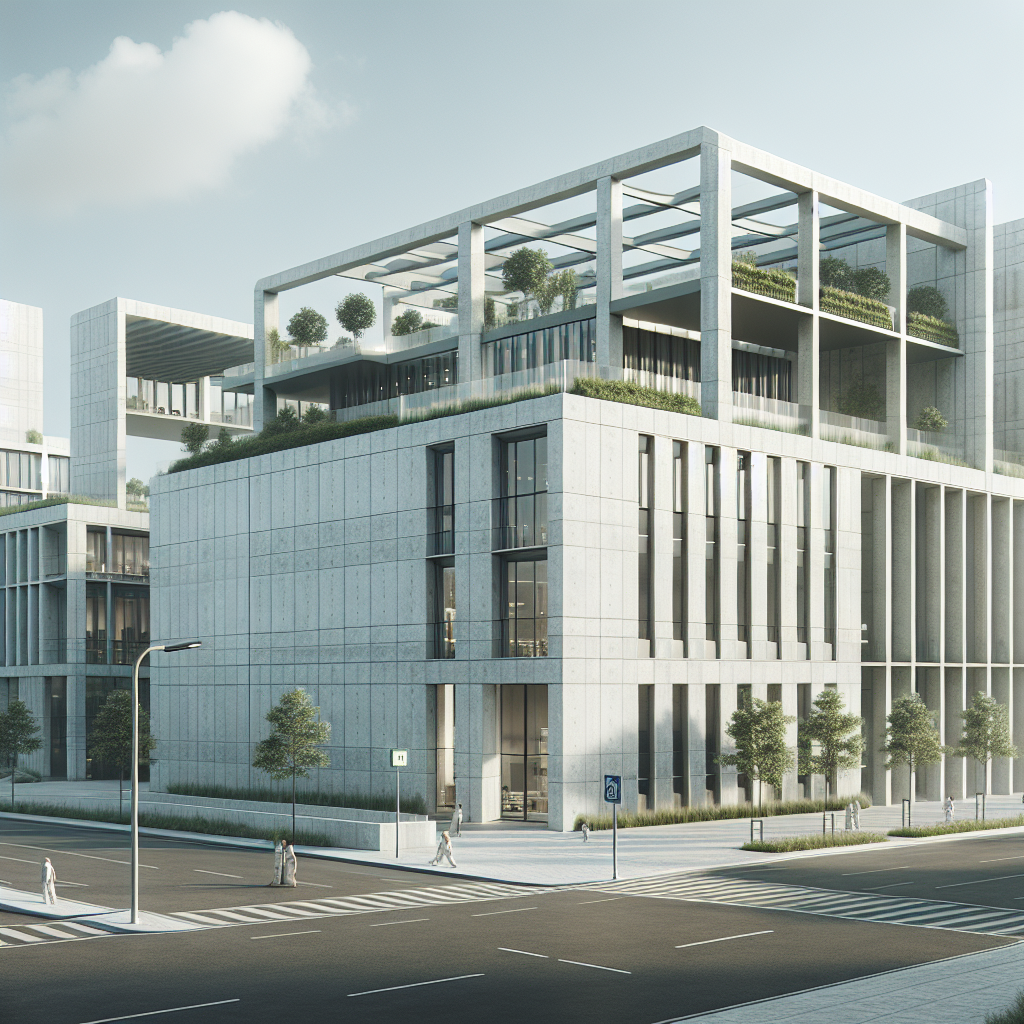
Adaptable Commercial Buildings: A Long-Term Strategy for Resilient Real Estate
Business needs are changing faster than most lease terms. Hybrid work models, shifting consumer behaviour, and supply-chain-driven occupancy patterns are reshaping what “good space” looks like. For owners, investors, and corporate occupiers, this increases the value of assets that can evolve without requiring repeated, costly reinvention.
Adaptable commercial buildings are designed or repositioned to accommodate multiple uses over time—within the same structure and often with minimal disruption. In practice, adaptability is not a design trend; it is a risk-management approach that supports long-term asset relevance, tenant retention, and more efficient capital planning.
This article explains what makes a building adaptable, how adaptability is achieved through adaptive reuse and modular approaches, and what decision-makers should evaluate when targeting long-duration value.
What Makes a Commercial Building “Adaptable”?
An adaptable building is one that can respond to evolving tenant requirements, regulatory conditions, and market demand without fundamental structural change. While the term can be used broadly, it typically includes three overlapping dimensions: spatial flexibility, technical flexibility, and use flexibility.
Spatial flexibility: layouts that can change without major reconstruction
Flexible floor plates, movable partitions, and multi-zoned planning allow spaces to be reconfigured as headcount, team structure, or operating models change. In hybrid environments, organisations increasingly require a mix of collaboration areas and quiet focus zones rather than uniform desk layouts.
Workplace research highlights the role of adaptable layouts in supporting different work styles—quiet areas for focused work, open zones for collaboration, and shared meeting spaces equipped for mixed in-person and remote participation (EDGE Workspaces).
Technical flexibility: building services that support change
Mechanical, electrical, and digital infrastructure often determines whether a space can be economically repurposed. Adaptable commercial buildings typically allow upgrades and reconfiguration of systems—ventilation, power distribution, lighting, and connectivity—without disproportionate intervention.
Use flexibility: potential for alternative programs over the asset lifecycle
Beyond internal reconfiguration, use flexibility includes the ability to shift between different tenant types or even different functions—such as office, light industrial, medical, logistics support, or mixed-use configurations—depending on location and zoning allowances. This is where adaptability intersects with adaptive reuse.
Why Adaptability Is Gaining Importance Now
Several forces are pushing the market toward flexible and reuse-oriented strategies. While the underlying drivers vary by region and asset class, the direction is consistent: buildings that can accommodate change tend to face lower long-term obsolescence risk.
Hybrid work and changing space utilisation
Hybrid work reduces the predictability of office demand while increasing demand for spaces that support collaboration, technology-enabled meetings, and varied work settings. This elevates the importance of multi-zoned planning and adaptable layouts that can evolve as policies and workforce expectations shift (EDGE Workspaces).
Rising construction costs and the appeal of repositioning existing buildings
As construction costs rise, owners and investors increasingly explore options that preserve core structures while upgrading performance and functionality. Adaptive reuse is often cited as a way to reduce capital expenditure compared to ground-up construction, shorten timelines, and bring assets back into productive use faster (Banesco USA).
Sustainability expectations and embodied carbon considerations
For long-term owners, sustainability is closely tied to risk and compliance: energy performance standards, tenant ESG expectations, and lifecycle carbon considerations increasingly influence investment decisions. Adaptive reuse can reduce demolition waste and lower embodied carbon by extending the life of existing structures (Banesco USA).
Adaptive Reuse: A Practical Path to Adaptable Commercial Buildings
Adaptive reuse is the process of repurposing an existing building for a new function or demand profile. In commercial real estate, it can include converting underutilised offices, retail assets, or warehouses into formats that better match current market needs—often with a strong sustainability rationale.
According to Banesco USA’s overview of adaptive reuse, investors and developers are attracted by lower redevelopment costs, faster delivery, reduced environmental impact, and urban revitalisation benefits (Banesco USA).
Where adaptive reuse can create long-term flexibility
Reuse projects can be structured to enable future change, not just a one-time conversion. For example, a repositioning strategy may focus on creating:
- Multi-tenant-ready floor plates that can be subdivided or consolidated
- Upgraded building services sized for a broader range of tenant requirements
- Clear structural spans that support different interior configurations
- Ground-floor adaptability for uses that benefit from visibility and access
In other words, adaptive reuse is most valuable when it produces an asset that remains adaptable, rather than one optimised narrowly for a single tenant profile.
Modular and Prefabricated Approaches: Speed and Flexibility in Delivery
Adaptability is not limited to reuse. Another route to flexible assets—particularly for expansion needs or phased development—is modular construction and prefabricated building components.
Commercial modular buildings are often presented as an approach that provides flexibility compared to traditional construction, including portable/temporary solutions and permanent modular buildings that can connect seamlessly with an existing structure (BOXX Modular).
How modular strategies support adaptability
- Phased capacity: space can be added to match operational growth rather than overbuilding upfront
- Reduced site disruption: off-site construction can limit disruption to ongoing operations (BOXX Modular)
- Speed to occupancy: shortened timelines may support faster operational readiness and reduced interim costs
- Standardisation with customisation: repeatable components can still allow tailored configurations
Modular construction is typically positioned as a method that reduces construction time by enabling concurrent off-site fabrication and on-site development activities (Avon Modular). For decision-makers, the relevance is strategic: it can support faster delivery of adaptable space while maintaining quality and compliance expectations.
Practical Implications for Investors and Corporate Occupiers
For decision-makers, the key question is not whether adaptable buildings are conceptually beneficial, but how to evaluate them in transactions, leasing decisions, and long-term asset planning.
What investors should assess in adaptable commercial buildings
- Re-letting and reconfiguration potential: can the space be subdivided, re-let, or reconfigured without structural work?
- Capex trajectory: does the building allow staged upgrades rather than major one-off interventions?
- Regulatory resilience: how exposed is the asset to future zoning, accessibility, and energy-performance requirements?
- Demand diversity: is the location and building format suitable for multiple tenant profiles?
- Environmental upside: does reuse or retention of structure support embodied carbon reduction goals?
What tenants and occupiers should prioritise
For businesses, adaptable space can improve operational continuity. When headcount, team organisation, or service delivery models change, an adaptable building can reduce the need for relocation or major fit-out cycles.
From a workplace design standpoint, flexible working environments are often defined by variety (different settings), agility (reconfigurable layouts), autonomy (choice of space), and multi-use zones that shift function across the day (Office Principles). Occupiers can use these principles to clarify requirements during space planning and lease negotiations.
Long-Term Perspective: Reducing Obsolescence Through Designed Optionality
In long-hold real estate strategies, the central risk is not short-term vacancy volatility; it is functional obsolescence. Buildings can become misaligned with market demand long before their structural life ends. Adaptability is a way to introduce “designed optionality” into an asset—making it easier to respond to market shifts without resetting the investment thesis.
Adaptive reuse and modular approaches each contribute to this optionality in different ways. Adaptive reuse can extend the productive life of existing structures while lowering environmental impact (Banesco USA). Modular and prefabricated strategies can support phased development and quicker delivery with reduced site disturbance (BOXX Modular).
For owners and investors focused on sustainable, high-quality commercial and mixed-use portfolios, the value of adaptability is primarily cumulative: fewer disruptive interventions, better alignment with tenant evolution, and a clearer pathway to maintaining relevance across cycles.
Conclusion
Adaptable commercial buildings are increasingly central to resilient real estate strategies because they help assets remain useful as markets change. Adaptability can be achieved through flexible layout planning, robust and upgradeable building services, and repositioning strategies that enable multiple potential uses over time.
Adaptive reuse offers a practical route to modern demand by retaining existing structures, often lowering redevelopment costs and reducing environmental impact (Banesco USA). Modular and prefabricated approaches can complement these goals by enabling speed, phased capacity, and reduced site disruption (BOXX Modular).
For investors, corporate occupiers, and long-term owners, the core takeaway is straightforward: adaptability is a measurable asset characteristic that supports long-term value by reducing obsolescence risk and improving the building’s ability to serve future demand.