
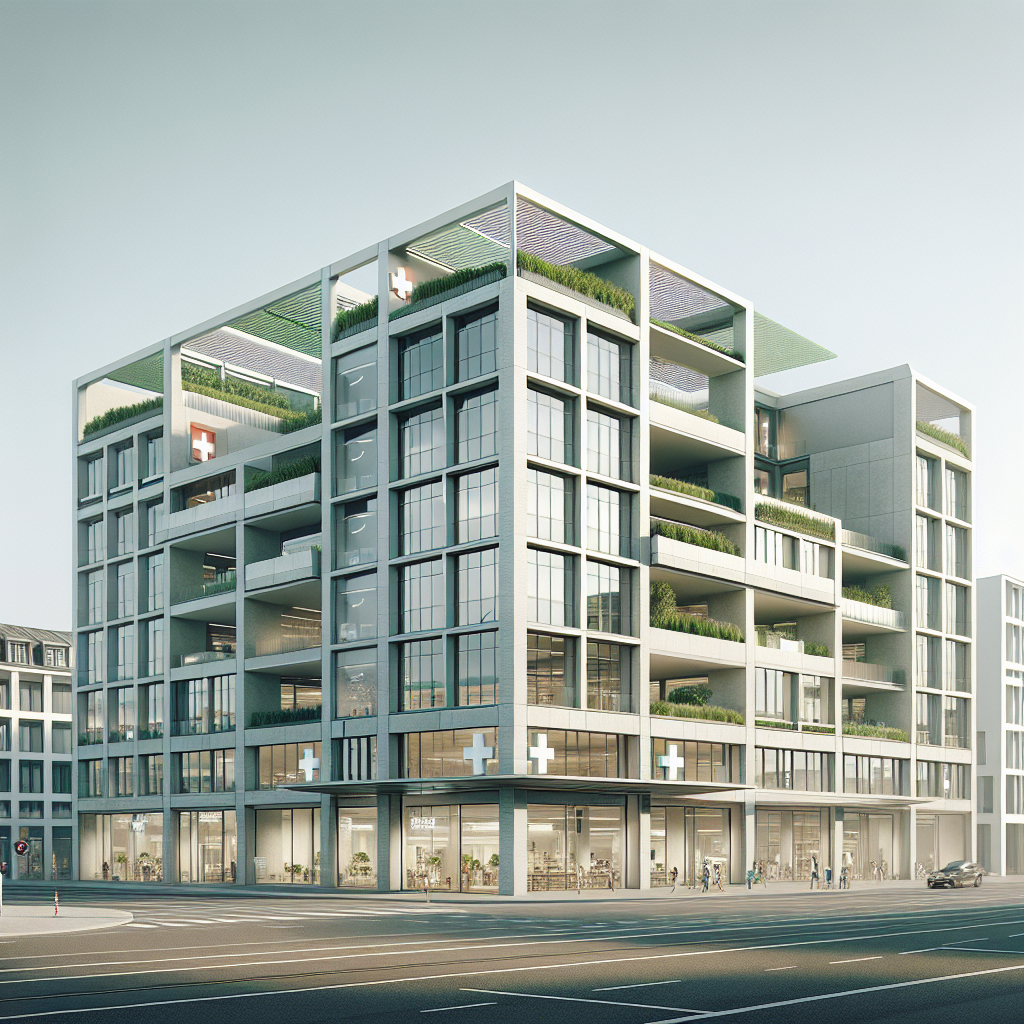
Infrastructure Real Estate Value: Why Connectivity, Utilities, and Urban Investment Matter
For business owners, investors, and occupiers of commercial and mixed-use space, location decisions rarely hinge on a building alone. Over long holding periods, the strongest performance tends to come from places where the wider urban system supports productivity, accessibility, and resilience.
This is why the relationship between infrastructure and property markets remains central to investment underwriting. Research and market commentary consistently point to the same sequence: infrastructure improves accessibility and functionality, demand follows, and values re-rate over time as an area becomes more competitive. One summary of this pattern is that “infrastructure arrives first, demand follows, and prices rise later” (Vidhathri Developers).
In this article, we outline how infrastructure influences infrastructure real estate value, what it can mean for leasing and portfolio strategy, and how decision-makers can assess the benefits and risks with a long-term perspective.
How infrastructure influences real estate value and demand
Infrastructure is often described as a city’s backbone, but for real estate it functions more like an operating system. It shapes how efficiently people, goods, and services move, how reliable utilities are, and how attractive a location is to employers and talent.
Well-planned infrastructure can increase the desirability of a location, improve liquidity (how quickly space can be leased or sold), and support higher and more stable rents. The mechanisms are generally consistent across markets, even though the magnitude varies by asset type and micro-location.
1) Accessibility and travel time: the most visible value driver
Transport infrastructure—rail, metro, roads, bridges, and multimodal hubs—changes “effective distance.” When commuting time falls, the usable catchment area for labour expands and businesses can access more customers and suppliers.
This improved connectivity is frequently associated with higher demand in surrounding areas because convenience becomes embedded in the location’s value proposition (NoBrokerage Blog). As a result, properties near infrastructure corridors can see faster absorption, particularly where tenants have commuting-sensitive workforces or rely on footfall and access.
2) Utilities and digital connectivity: reliability as an investment attribute
For commercial and mixed-use assets, utilities are not a background feature—they are operational risk factors. Water, electricity, sewage capacity, and broadband/telecom quality directly affect tenant experience, operating continuity, and the feasibility of intensification.
Academic work reviewing infrastructure impacts highlights the importance of transport networks and “utility availability” as consistent contributors to higher demand and price appreciation (IJSAT paper (2025)).
3) Economic clustering: when infrastructure attracts jobs and services
Infrastructure does not only move people; it can change where economic activity concentrates. Improved access makes certain nodes more viable for offices, services, education, and healthcare, which in turn increases daily footfall and supports a broader mix of uses.
As connectivity improves, commercial development often expands and residential demand tends to follow, reinforcing the attractiveness of mixed-use environments (NoBrokerage Blog). This dynamic is particularly relevant for investors seeking long-duration income, as diversified demand sources can contribute to occupancy stability.
4) Quality of life and amenity infrastructure: the demand “multiplier”
In many markets, the competition for talent increasingly links corporate location decisions to quality-of-life indicators. Parks, cultural institutions, healthcare access, and education infrastructure influence where people choose to live and work.
Case-based commentary also notes that quality-of-life projects—such as parks and public realm upgrades—can materially lift nearby property values by improving neighbourhood desirability (Georgetown Steers Center).
Practical implications for business owners, tenants, and investors
Understanding infrastructure’s impact is most useful when translated into practical decisions: where to lease, what to buy, and how to time capital allocation.
For occupiers: infrastructure affects workforce access and operating efficiency
Tenants often experience the effects of infrastructure before investors do. A new transit line, upgraded road network, or better digital connectivity can change how reliably staff can commute, how suppliers deliver, and how customers reach a location.
For decision-makers evaluating premises, infrastructure considerations commonly include:
- Public transport access: resilience against congestion and parking constraints, and broader talent reach.
- Road connectivity: delivery reliability, client access, and time savings for field teams.
- Utility capacity and redundancy: reduced downtime risk for critical operations.
- Amenity ecosystem: proximity to services that support employee retention and satisfaction.
For investors: infrastructure can support higher rents and lower vacancy risk
From an underwriting perspective, infrastructure can influence both cash flow and exit value. Commentary on infrastructure-led markets often links improved connectivity to “higher demand” and “growth in rental income” as working professionals and businesses concentrate in well-served corridors (Vidhathri Developers).
Market research also frames the relationship more broadly: infrastructure development contributes to real estate demand and increasing value in multiple regions (Precedence Research). While such global aggregates do not replace local analysis, they reinforce the structural linkage between urban investment and property performance.
What to evaluate in due diligence: separating “announced” from “deliverable”
The main analytical challenge is that infrastructure benefits are not always immediate and are sometimes priced in before completion. Early announcements can drive speculative price inflation and create a mismatch between expectations and delivered outcomes (Vidhathri Developers).
To manage this, investors and occupiers can structure assessment around evidence and deliverability:
- Project status: budget approval, procurement stage, construction progress, and realistic completion dates.
- Network effect: whether the project meaningfully improves connectivity to employment nodes and services, not just within a micro-area.
- Planning and zoning context: whether intensification is supported, enabling demand to translate into viable development and tenant mix.
- Construction-phase impacts: temporary disruption from dust, noise, and access constraints that can affect near-term leasing (Vidhathri Developers).
Long-term perspective: how infrastructure reshapes corridors over time
Infrastructure’s effect on value is often strongest when it enables structural change: new growth corridors, decentralisation from saturated cores, and higher-density mixed-use patterns. Over time, this can shift where companies locate, where workers live, and how districts specialize.
Academic and applied research frequently characterizes infrastructure development as a “catalyst” for real estate growth, linking it with increased demand, enhanced desirability, and economic expansion (IJSAT paper (2025)). However, long-term outcomes depend on governance, environmental mitigation, and the integration of social infrastructure (schools, healthcare, public realm) alongside transport and utilities.
It is also important to acknowledge that infrastructure can produce uneven results. Some areas benefit directly, while nearby locations may see limited improvement. In addition, negative externalities—such as noise or pollution—can offset gains for certain assets if not managed through design and planning (IJSAT paper (2025)).
For long-term-oriented owners, this reinforces the value of focusing on fundamentals: assets positioned to benefit from improved accessibility and amenity without being overly exposed to transitional disruption or single-project dependency.
Conclusion
Infrastructure real estate value is not a slogan; it is a practical framework for understanding why some locations compound value over time. Transport connectivity, reliable utilities, and supportive social and economic infrastructure can increase demand, improve rental prospects, and strengthen liquidity—often following a recognizable sequence where infrastructure precedes demand and pricing (Vidhathri Developers).
For occupiers, infrastructure shapes workforce access and day-to-day operating efficiency. For investors, it can support income stability and long-run value re-rating, provided that due diligence distinguishes deliverable projects from speculative narratives and accounts for construction-phase and externality risks.
In an environment where capital preservation and resilience matter, infrastructure remains one of the most durable lenses for assessing long-term real estate fundamentals.