
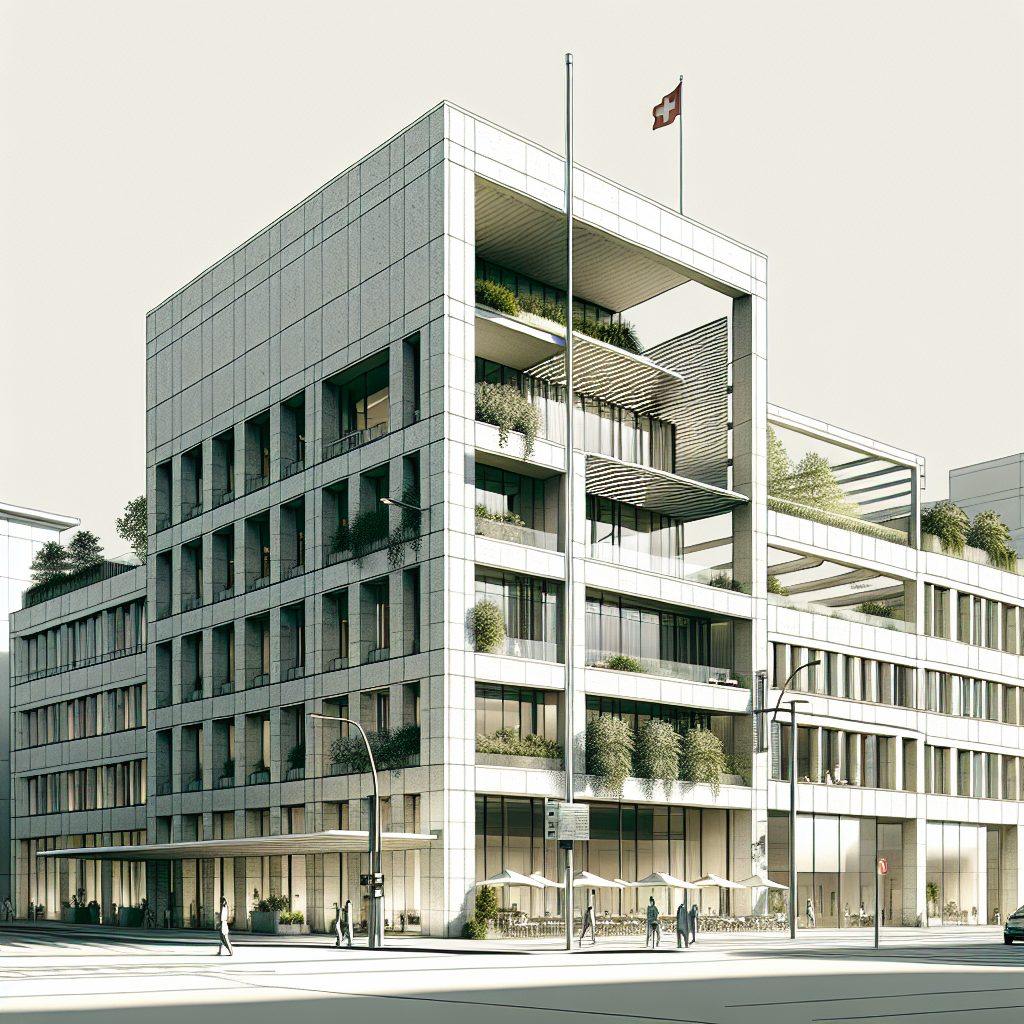
Energy-Efficient Buildings in Switzerland: What Decision-Makers Should Know About Standards, Systems, and Long-Term Value
Energy-efficient buildings in Switzerland have moved from a niche sustainability topic to a central consideration in real estate strategy. For business owners, investors, and corporate occupiers, energy performance increasingly influences operating costs, user comfort, regulatory approvals, and long-term asset resilience.
Switzerland’s approach combines clear performance standards with practical planning tools and proven building technologies. Among these, the Minergie framework has become a widely used reference point for energy, comfort, and quality in both new builds and renovations. At the same time, building-integrated renewables and nature-based measures such as green roofs are becoming more common in Swiss cities.
Why “energy-efficient buildings Switzerland” is a strategic topic—not only a technical one
For commercial and mixed-use portfolios, energy efficiency is best understood as a risk-and-performance theme. It affects total cost of occupancy for tenants, operating predictability for owners, and the ability of a building to remain competitive as standards evolve.
In practice, energy efficiency is closely linked to indoor environmental quality, resilience to heat, and value preservation. The most relevant question for decision-makers is often not “Which technology?” but rather “Which performance level and operating concept will remain robust over decades?”
Minergie as a Swiss benchmark for comfort, efficiency, and value preservation
Minergie has been positioned as a Swiss standard for “comfort, efficiency and value preservation” since 1998, with a focus on comfortable living and working conditions for users of new and renovated buildings (Minergie overview (PDF)).
From an owner’s perspective, Minergie is relevant because it connects energy targets with building quality requirements that are directly tied to operational outcomes. The standard highlights the role of a high-quality building envelope and controlled air exchange as core elements (Minergie overview (PDF)).
What Minergie requires in practice
Minergie emphasizes an integrated approach rather than single measures. Key elements described in the Minergie overview include airtightness (with documentation), controlled ventilation/air exchange, and an energy concept aimed at very low consumption and high renewable share—particularly in new buildings (Minergie overview (PDF)).
The same source notes that new builds are “largely heated fossil-free” and often produce some of their own electricity. Under Minergie-A, energy production can even exceed consumption (Minergie overview (PDF)).
Understanding Minergie, Minergie-P, and Minergie-A
Minergie distinguishes between several performance levels, allowing owners to choose an ambition level aligned with asset strategy and site conditions:
- Minergie: Above-average requirements for quality and efficiency compared with conventional construction (Minergie overview (PDF)).
- Minergie-P: Targets the lowest levels of energy consumption and “maximum comfort,” supported by an outstanding building envelope; the thermal energy requirement is described as almost zero (Minergie overview (PDF)).
- Minergie-A: Combines strong envelope and systems performance with “maximum energy independence,” potentially generating surplus energy through photovoltaics, with battery or load management where needed (Minergie overview (PDF)).
Energy efficiency is also about comfort, health, and operational stability
For office, retail, and mixed-use buildings, comfort outcomes influence tenant satisfaction, productivity, and retention. Minergie explicitly links energy performance with indoor climate: an “outstanding building envelope” paired with controlled air exchange is presented as a way to ensure a pleasant room climate in both summer and winter, while also removing pollutants and excess moisture (Minergie overview (PDF)).
This matters to long-term owners because the operational phase drives most lifecycle outcomes. A building that performs well on paper but is difficult to operate reliably can create cost volatility and reputational risk. Minergie addresses this with optional quality systems designed to support construction quality assurance and optimized operation (Minergie overview (PDF)).
Certification and planning implications in Switzerland
Energy efficiency requirements often intersect with permitting, reporting, and stakeholder alignment. Minergie notes that its standardized certification process and clear requirements simplify planning and construction, supported by a network of specialist partners (Minergie overview (PDF)).
Importantly for project teams, Minergie also states that, as a rule, a Minergie application replaces the energy certificate for buildings that is required as part of the planning permission process in Switzerland (Minergie overview (PDF)).
From “efficient” to “self-sufficient”: What advanced projects suggest about the direction of travel
While not every commercial asset will aim for full self-sufficiency, Switzerland provides real-world examples of how far building energy concepts can go when generation, storage, and management are coordinated.
A case study presented on the European Commission’s BUILD UP portal describes a “fully self-sufficient” residential project in Männedorf combining photovoltaics, battery storage, synthetic e-gas/biogas, and intelligent energy management. The case study reports that the buildings produce more energy than they consume and lists a final energy figure of 40.07 kWhfe/m2.year, with 100% renewable energy production noted (BUILD UP case study).
For investors, the most transferable insight is not the exact system mix, but the operating logic: reduce demand through envelope and systems, then cover a larger share of remaining needs through on-site or managed renewables—supported by monitoring and control.
Green roofs in Switzerland: biodiversity, cooling, and urban resilience
Energy-efficient buildings Switzerland discussions increasingly include measures that reduce cooling loads and mitigate heat stress, particularly in dense urban settings. Green roofs are a relevant example because they influence microclimate and stormwater behavior while supporting biodiversity goals.
Basel is cited as having made green roofs compulsory for flat roofs on new and retrofitted buildings as part of a biodiversity strategy, with the policy reportedly resulting in more than 1 million square metres of green roofs (Living Architecture Monitor summary, referencing EuroNews). The same summary notes benefits such as helping to cool buildings more quickly during summer months (Living Architecture Monitor).
For commercial owners, green roofs can be assessed as part of a broader “heat and water” strategy alongside shading, façade design, and ventilation concepts. Their value is often strongest where municipalities prioritize biodiversity, or where roof space can deliver multiple functions at once.
Practical implications for investors and occupiers
For decision-makers evaluating energy-efficient buildings in Switzerland—whether for acquisition, development, or lease—several considerations tend to have long-term relevance:
- Performance definition: Using a recognized benchmark such as Minergie can clarify targets across design, construction, and operation (Minergie overview (PDF)).
- Comfort and indoor climate: Controlled air exchange and a high-quality envelope are not only energy measures; they shape health, moisture control, and year-round comfort (Minergie overview (PDF)).
- Operational quality: Quality assurance during construction and optimized operation can reduce performance gaps and defect risk over time (Minergie overview (PDF)).
- Renewable integration: Projects combining photovoltaics with storage and energy management illustrate how independence and resilience can be increased where conditions allow (BUILD UP case study).
- Urban climate measures: Policies such as Basel’s green roof requirement indicate that nature-based solutions may become more common in permitting and planning expectations (Living Architecture Monitor).
Long-term perspective: energy efficiency as value preservation
In Swiss real estate, the long-term case for energy-efficient buildings is increasingly tied to value preservation: operational stability, reduced exposure to energy price volatility, and durable comfort performance. Minergie explicitly frames the label as standing for high quality in construction and states that it “demonstrably preserves building value in the long term,” while also noting that optional quality systems can support efficient operation and reduce the risk of structural defects (Minergie overview (PDF)).
For owners and developers with a multi-decade horizon, the most resilient approach is typically a layered one: first reduce demand through envelope and design; then optimize building systems and operation; and finally integrate renewables and, where relevant, climate-adaptation measures such as green roofs.
Conclusion
Energy-efficient buildings in Switzerland are shaped by a combination of performance standards, proven engineering, and increasingly, urban resilience measures. Minergie provides a structured framework that links efficiency with comfort, quality, and operational clarity, while advanced projects demonstrate how renewables, storage, and management can push performance toward energy independence (Minergie overview (PDF); BUILD UP case study).
For investors, business owners, and occupiers, the most durable value often comes from aligning energy targets with user needs and operational reality—ensuring that efficient design translates into consistent, long-term building performance.