
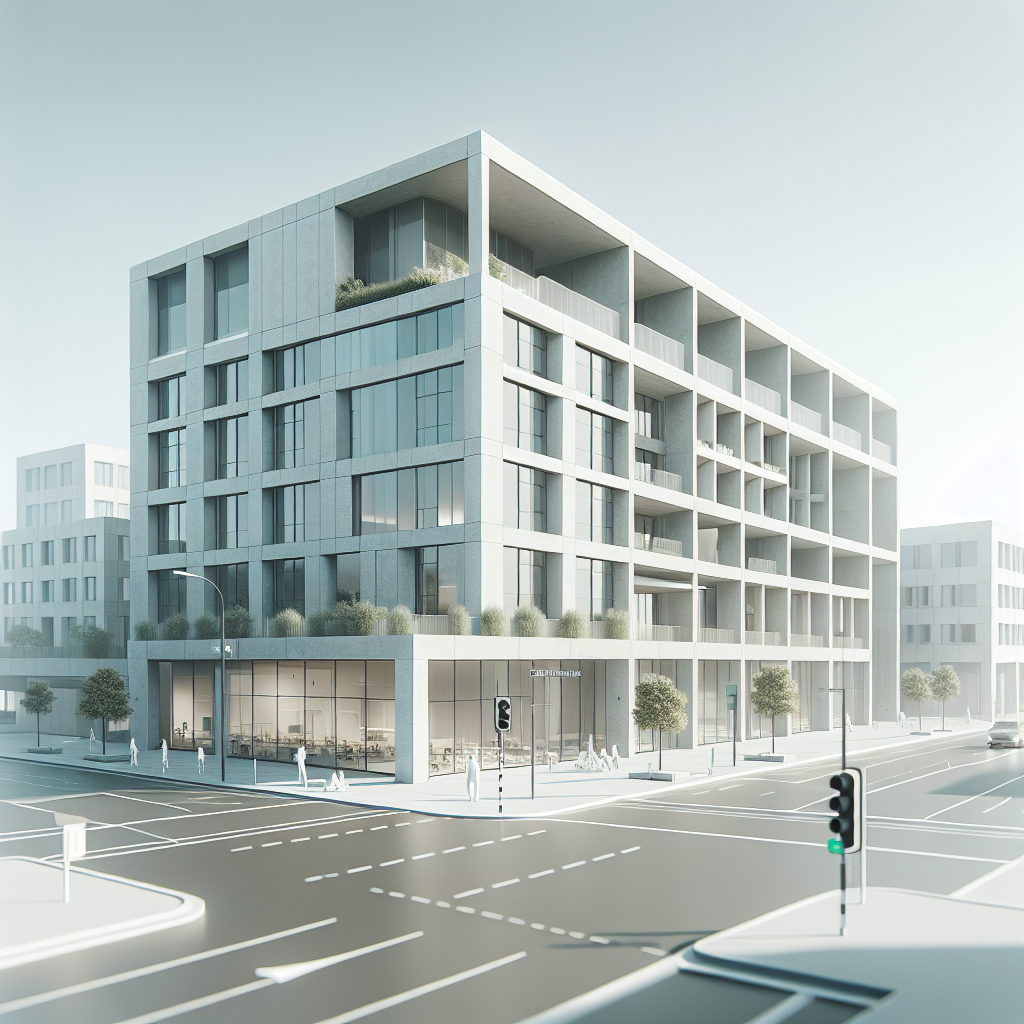
Mixed-use development in urban real estate: fundamentals, benefits, and long-term considerations
In many European cities, the most durable urban districts have historically combined multiple functions—workplaces, shops, services, and housing—in close proximity. Today, mixed-use development has re-emerged as a structured planning and investment approach that responds to changing tenant expectations, mobility patterns, and sustainability goals in urban real estate.
For business owners, investors, and corporate decision-makers, mixed-use projects can be relevant for three reasons: they can broaden demand drivers beyond a single tenant type, support “15-minute” accessibility goals through walkability and transit connections, and improve a district’s ability to adapt when markets shift. At the same time, mixed-use assets can introduce higher development complexity and more demanding operational requirements.
What is mixed-use development?
Mixed-use development blends multiple uses—such as residential, commercial, cultural, institutional, and entertainment—within one space, with those functions being physically and functionally integrated and connected by pedestrian routes. Importantly, mixed-use can be delivered at multiple scales: a single building, a block, or an entire neighborhood, and it can involve new construction, adaptive reuse, or brownfield redevelopment. This widely used definition is summarized in the reference overview from Wikipedia’s mixed-use development article.
In practical terms, mixed-use is not just “adding retail to the ground floor.” It is an urban strategy that aims to align land use, mobility, and public realm design so that daily needs can be met with fewer and shorter trips—ideally supporting walking, cycling, and transit as realistic choices.
Mixed-use patterns: vertical, horizontal, and walkable districts
Mixed-use can be organized in different ways, each with distinct implications for design, tenant compatibility, and operations:
- Vertical mixed-use: multiple uses stacked within one building (often public-facing uses at ground level and more private uses above).
- Horizontal mixed-use: different buildings within one site or district, each typically single-purpose, but planned as a cohesive whole.
- Mixed-use walkable areas: a combination of vertical and horizontal forms, designed so key destinations are reachable within a short walk (often framed as roughly 10 minutes in planning literature).
These typologies and associated design considerations are described in the academic overview Mixed Used Development in Urban Areas (IJNRD PDF), which also highlights the need to balance daytime and nighttime activity while maintaining pedestrian comfort and safe circulation.
Why mixed-use matters in European urban real estate
Mixed-use is often discussed differently in Europe than in North America. Research cited in the mixed-use overview notes that many European city centers remained mixed-use “by default,” while large parts of the United States spent decades reinforcing separated uses through zoning. As a result, in European contexts the term “mixed-use” can be especially relevant when planning new districts, repurposing underused sites, or intensifying areas around infrastructure nodes.
This distinction is explored in the “Mixed Use by Default” planning literature referenced in the Wikipedia article, which summarizes how regulatory history shaped different urban outcomes.
Core benefits: what mixed-use can deliver over the long term
1) Land-use efficiency and district vitality
One widely cited rationale for mixed-use is more efficient land utilization in dense settings. By combining uses, cities and owners can reduce reliance on large single-purpose parcels and support more continuous activity across the day. The engineering-focused perspective in McClure’s overview of mixed-use benefits highlights efficiency gains such as reducing the need for expansive surface parking and supporting more compact urban form.
From an asset and portfolio perspective, the goal is not intensity for its own sake, but a stable, legible urban environment where footfall, services, and public space reinforce each other over time.
2) Economic resilience through diversified demand
Mixed-use districts can offer a broader base of demand than single-use locations, because they serve multiple user groups: residents, employees, visitors, and service providers. In principle, that diversity can reduce the sensitivity of income to one market segment—particularly relevant when office utilization, retail formats, or consumer behavior shift.
Industry commentary also emphasizes that mixed-use real estate can create diversified income streams by combining different asset types within a single investment thesis. See the concise overview from the Urban Land Institute’s publication Urban Land Magazine: Mixed-Use.
3) Mobility and sustainability outcomes (with important caveats)
Mixed-use is frequently associated with more sustainable transport patterns because shorter distances can support walking, cycling, and transit use. The mixed-use overview notes research linking a greater variety of functions with reduced travel distances in certain contexts, supporting micro-mobility and pedestrian-oriented infrastructure (Mixed-use development).
However, sustainability outcomes are not automatic. Research summarized in the same overview indicates that certain high-intensity “hybrid” metropolitan configurations may not reduce carbon emissions compared with low, dense urban forms—potentially due to attracting car traffic from visitors. This is a useful reminder that the transportation plan, parking strategy, and public realm design can be as important as the building program itself.
4) Social function and “18-hour” neighborhoods
Planning literature often frames mixed-use around “live, work, play,” aiming to transform areas that are active only during business hours into neighborhoods with longer daily utilization. When designed well, this can support perceived safety and street life by keeping more “eyes on the street” into the evening, a concept referenced in the social benefits section of the mixed-use overview.
For employers and service providers, this can also translate into improved amenity access and a more functional location for attracting and retaining talent—provided the district avoids conflicts between uses (for example, noise and servicing issues).
Practical implications for investors, owner-developers, and tenants
Tenant mix is an operating strategy, not a marketing label
Mixed-use performance depends on whether uses are compatible and operationally coherent. Residential, office, retail, and hospitality often operate on different schedules and have different expectations around access control, loading, building services, and acoustic separation. Guidance in the IJNRD PDF highlights the importance of internal circulation, pedestrian comfort, and the distribution of land uses to maintain functionality across day and night.
Mobility planning: parking, access, and “park once” behavior
In urban real estate, mobility is both a leasing factor and a cost driver. Mixed-use can reduce some trip demand through proximity, but it can also generate complex peak patterns (morning commuter peaks, evening leisure peaks, weekend retail peaks). Parking design, servicing routes, and cycling facilities need to be aligned with the intended mode share and public transport connectivity.
Financing and delivery complexity
Mixed-use projects can require higher up-front capital and more extensive coordination across approvals, code compliance, and construction sequencing. The mixed-use overview notes that multi-tenant, multi-program buildings can be perceived as riskier because they incorporate multiple tenant types and revenue lines in a single structure (Mixed-use development). For owner-developers, this raises the importance of phased delivery, clear risk allocation, and realistic time-to-stabilization assumptions.
Risks and trade-offs to manage
Equity and affordability pressures
Large mixed-use projects can drift toward higher-end positioning if the project economics rely on maximizing near-term revenues. The equity-focused discussion summarized in the mixed-use overview notes research suggesting that amenity-rich mixed-use districts may prioritize high-end residential and Class A office space, which can limit access for certain occupational groups. For long-term-oriented owners, this highlights the governance challenge: aligning project objectives with local needs and policy frameworks in a way that remains financially viable.
Operational conflicts between uses
Noise, deliveries, waste management, ventilation, and security requirements can differ substantially across tenants. Without clear rules and robust building systems, mixed-use can create friction that affects satisfaction and retention. These issues are solvable, but they need to be addressed early in design and leasing strategy rather than after occupancy.
A long-term perspective: mixed-use as an adaptability framework
One of the most strategic arguments for mixed-use development in urban real estate is adaptability. Districts that combine multiple functions may be better able to absorb shocks—such as changes in office demand, retail formats, or travel patterns—because they can draw activity from more than one user group. The resilience discussion summarized in the mixed-use overview highlights how commercially oriented areas can be more vulnerable when foot traffic patterns change, while integrated districts may maintain a baseline of users.
For long-term holders, the most durable mixed-use assets tend to be those where building form, servicing logic, and floorplate flexibility allow space to be re-tenanted or re-purposed over time. In this sense, mixed-use is less a fixed product type and more a framework for maintaining relevance across cycles.
Conclusion
Mixed-use development is a central tool in contemporary urban planning and urban real estate, defined by the functional integration of multiple uses and strong pedestrian connectivity (Mixed-use development). When executed with disciplined design and operations, it can support land-use efficiency, diversified demand drivers, and mobility patterns that align with long-term sustainability goals.
At the same time, mixed-use is inherently more complex than single-use development. Financing, phasing, tenant compatibility, and day-to-day building management require careful planning. For investors and decision-makers evaluating mixed-use opportunities, the key question is not whether “mixed-use” is attractive in principle, but whether the specific combination of uses, access strategy, and adaptability features supports long-term value and stable district performance.