
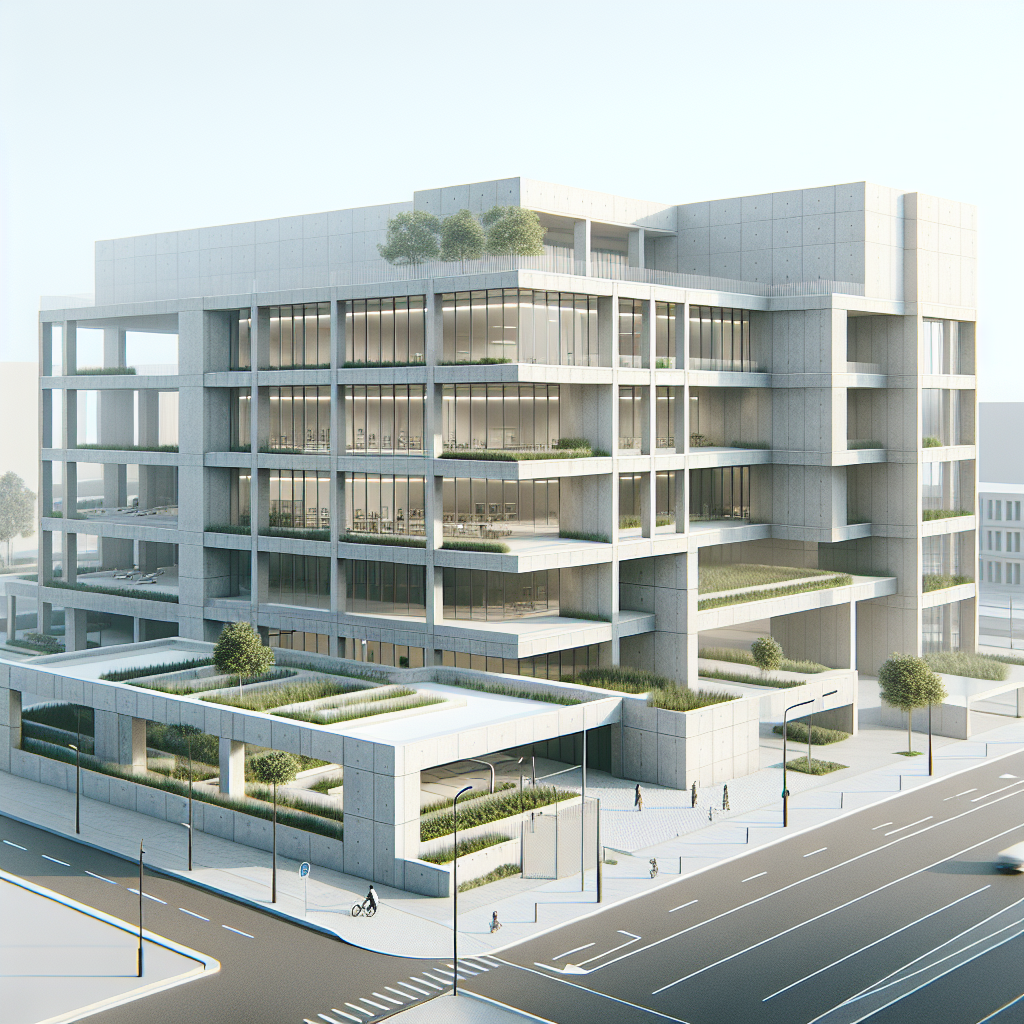
Future-Proof Buildings: What Decision-Makers Should Look for in Commercial Property
Across Europe, commercial real estate is being reshaped by a mix of technology change, evolving workplace patterns, and rising expectations around sustainability. For owners, occupiers, and investors, the central question is increasingly about longevity: how to create and maintain assets that remain useful, compliant, and attractive across multiple market cycles.
In this context, future-proof buildings are not defined by a single feature or certification. They are defined by a design and asset-management approach that anticipates change—regulatory, technical, environmental, and operational—and reduces the risk of functional obsolescence.
This article outlines what future-proofing means in practice, how it connects to key commercial property trends, and what it implies for investment and leasing decisions over the long term.
What “future-proofing” means in commercial buildings
Future-proofing refers to a strategic planning and design process that helps buildings remain “functional, efficient, and relevant well into the future.” It requires anticipating changes in technology, regulation, user needs, and environmental conditions, and embedding flexibility and resilience into both the building fabric and its operation.
As summarized in Digital Blue Foam’s overview of smart solutions in commercial building design, future-proofing is not only about immediate performance; it is about designing for adaptability and sustainability so that assets can evolve rather than become stranded. See: Smart Solutions in Commercial Building Design.
In practical terms, future-proofing has three consistent pillars:
- Adaptability: the ability to change layouts or use-cases without major reconstruction.
- Scalability: the ability to expand capacity (space, systems, connectivity) as requirements grow.
- Operational intelligence: systems and data that support efficient, secure, and responsive building management.
Commercial property trends shaping future-proof buildings
Several linked trends are influencing how commercial and mixed-use buildings are planned, upgraded, and assessed.
1) Quality differentiation and “obsolescence risk”
One of the most important commercial property trends is increasing separation between high-quality buildings and assets that no longer meet occupier expectations. As J.P. Morgan’s 2026 outlook notes, “lower quality space is at risk of obsolescence,” often requiring upgrades or repurposing to remain viable. Source: 2026 commercial real estate outlook (JPMorganChase).
For decision-makers, this makes future-proofing a risk-management discipline as much as a design philosophy. Buildings that can adapt—physically and technically—can stay competitive as standards shift.
2) Retrofit momentum and holistic value creation
Across many markets, the future of commercial stock is increasingly tied to refurbishment and adaptive re-use rather than new build alone. JLL highlights that retrofit strategies are moving beyond energy efficiency toward a more holistic model that can support talent attraction, brand strategy, community impact, and health and wellbeing. Source: JLL Outlook on Design Trends 2025.
This matters for long-term owners because refurbishments can be timed and scoped to extend asset life and reduce capital disruption. It also matters for occupiers, as retrofits increasingly shape the “experience” and functionality of buildings.
3) Sustainability as baseline, not differentiator
Environmental performance has shifted from a “nice-to-have” to a baseline requirement driven by corporate commitments, employee expectations, and regulation. JLL points to increasing investment in building refurbishments and sustainability performance, with sustainability expectations especially strong among younger generations. Source: JLL Outlook on Design Trends 2025.
From an investment perspective, the link between sustainability and long-term risk is frequently framed in terms of operating costs and regulatory exposure. The Bill Gladstone Group notes that tightening environmental regulations make sustainable development important for compliance and risk avoidance. Source: Sustainable Development: The Future of Commercial Real Estate.
4) Smart building systems and “science-led design”
Smart solutions—automation, sensing, and data analytics—are increasingly associated with efficient operations and better occupant experience. Digital Blue Foam describes smart solutions as a means to make buildings “more adaptable, efficient, and responsive,” particularly as regulations become more stringent and technology evolves. Source: Digital Blue Foam: Smart Solutions in Commercial Building Design.
JLL also emphasizes the growing role of AI and data-driven tools in “science-led design,” allowing design teams to evaluate how buildings might perform and how they might affect people or the planet. Source: JLL Outlook on Design Trends 2025.
Key design and operational elements of future-proof buildings
Future-proofing should be visible in both the “hard” building features (structure, envelope, systems) and the “soft” operational model (controls, monitoring, maintenance processes). The following elements are widely associated with future-proof commercial design.
Adaptable and scalable space planning
Adaptability is foundational: flexible floor plates, modular elements, and layouts that can be reconfigured to suit different occupiers or workplace models. Digital Blue Foam highlights examples such as movable walls and open plans that can be adapted to shifting workspace trends. Source: Digital Blue Foam.
Scalability complements adaptability by ensuring that growth does not require full replacement of systems or major structural work. This can include allowances for additional capacity in key building services or structural provisions that reduce barriers to expansion.
Smart HVAC and automated lighting
Energy and comfort performance are central to building competitiveness and operating resilience. Smart HVAC uses sensors and algorithms to adjust temperature and airflow in real time, improving comfort while reducing energy consumption. Digital Blue Foam also notes the value of integrating HVAC into a broader Building Management System (BMS) for centralized monitoring and data-driven decisions. Source: Digital Blue Foam.
Automated lighting systems—often based on occupancy and daylight sensors—support operational efficiency. Digital Blue Foam cites that automated lighting can cut lighting energy use by up to 50% in some cases, illustrating how controls can materially affect operating cost profiles. Source: Digital Blue Foam.
IoT integration and data-enabled management
IoT (Internet of Things) integration connects devices and systems to collect data on temperature, humidity, occupancy, and energy use. This data can be used to optimize performance, improve comfort, and identify inefficiencies. Examples include smart thermostats, occupancy sensors, and IoT-enabled energy management systems. Source: Digital Blue Foam.
For asset owners and facility managers, this can support more proactive operations and clearer reporting—important for both internal governance and external stakeholder requirements.
Sustainable materials and construction methods
Material choices and construction techniques influence embodied carbon, indoor environmental quality, and durability. Digital Blue Foam highlights examples such as recycled steel, reclaimed wood, bamboo, and low-VOC paints, which can also support healthier indoor environments. Source: Digital Blue Foam.
Modular construction and prefabrication are also framed as tools for quality control and future flexibility, with the additional benefit of reducing construction time and waste. Source: Digital Blue Foam.
Security and cybersecurity as core building functions
As building systems become more connected, security expands beyond physical access control into cybersecurity. Digital Blue Foam explicitly flags cybersecurity as a critical concern for interconnected, IoT-enabled buildings, requiring robust protocols, monitoring, and updates. Source: Digital Blue Foam.
For decision-makers, this is not a purely technical issue. Cyber resilience affects operational continuity, tenant trust, and potentially liability exposure.
Practical implications for investors and occupiers
Future-proofing can be translated into practical due diligence questions and leasing considerations.
For investors: underwriting longevity and capex optionality
From an investment standpoint, future-proof buildings help reduce downside scenarios linked to obsolescence. J.P. Morgan’s observation about lower-quality space being at risk of obsolescence underscores why adaptability and upgrade pathways matter for long-term value. Source: JPMorganChase CRE trends.
Investors typically benefit when a building can be improved incrementally (systems upgrades, retrofit programs, digital overlays) rather than requiring disruptive repositioning.
For occupiers: resilience, employee experience, and operational clarity
Occupiers increasingly evaluate buildings through the lens of employee experience and operational reliability. JLL describes growing focus on end-to-end experience and on social connection in physical spaces, influencing how workplaces and mixed-use environments are designed and refurbished. Source: JLL Outlook on Design Trends 2025.
Future-proofing supports occupiers by reducing operational surprises (comfort issues, maintenance failures), improving the ability to reconfigure space, and supporting sustainability reporting expectations.
Long-term perspective: future-proofing as a continuous process
Future-proofing is rarely “completed” at handover. Buildings operate in changing conditions: new regulations, new technologies, and new patterns of use. Digital Blue Foam highlights emerging technologies such as AI-driven predictive maintenance, 5G connectivity, and increasing automation that can extend performance and responsiveness over time. Source: Digital Blue Foam.
At the same time, JLL’s “science-led design” perspective suggests that data and analytics will increasingly shape how design and refurbishment decisions are made, with deeper collaboration across disciplines. Source: JLL Outlook on Design Trends 2025.
For long-term owners, this points to an operating model where continuous improvement—supported by monitoring, targeted capex planning, and upgrade-ready systems—becomes part of asset stewardship.
Conclusion
Future-proof buildings are best understood as commercial assets designed and managed for change. They combine adaptable space planning, scalable infrastructure, smart building systems, sustainability-minded materials and methods, and robust security—including cybersecurity.
As commercial property trends continue to reward higher-quality, resilient stock and penalize obsolescence risk, future-proofing offers a practical framework for protecting long-term value. It supports investors through improved asset durability and capex flexibility, and it supports occupiers through better operational performance and experience outcomes.
Ultimately, future-proofing is not a single technology decision. It is a long-term approach to building design, refurbishment, and operations that helps commercial real estate remain relevant—technically, environmentally, and economically—over time.