
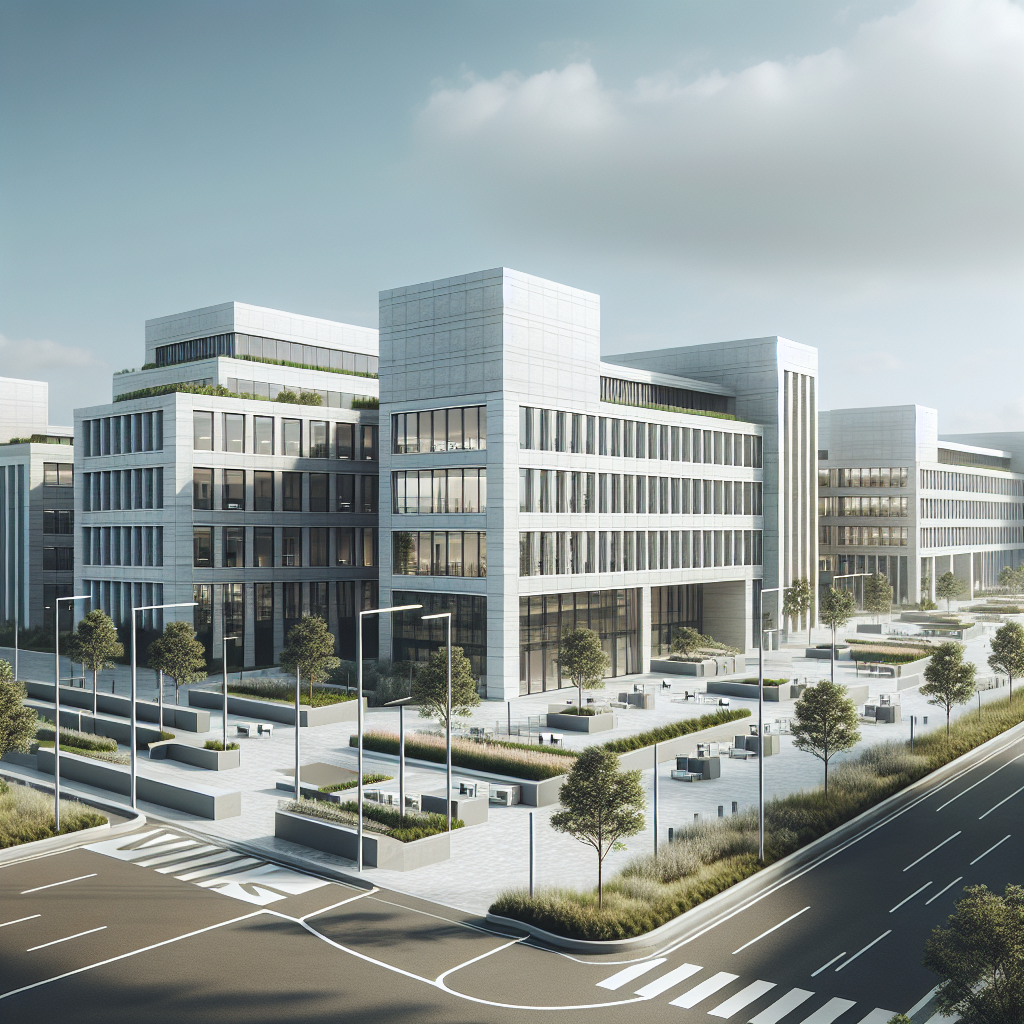
Suburban Commercial Real Estate: What the Urban–Suburban Shift Means for Long-Term Decisions
Suburban commercial real estate has moved from a secondary consideration to a central topic in boardrooms, investment committees, and occupier strategy discussions. The shift is not simply a short-term reaction to the pandemic; it reflects structural changes in how people work, how companies operate, and what tenants expect from workplaces and local services.
Research highlights that the resurgence of suburban commercial demand has been accelerated by remote and hybrid work, as more employees prefer to work from home at least part-time. In turn, many businesses have reassessed the need for a constant, large footprint in central business districts and begun exploring locations that balance accessibility, cost, and employee preferences. This dynamic is outlined in Urban vs. Suburban Shifts: Investigating the Dynamics in Commercial Real Estate Markets.
Why Suburban CRE Is Gaining Attention
In many markets, suburban commercial real estate benefits from a practical value proposition: more space, lower occupancy costs, and proximity to where people live. These fundamentals matter for tenants seeking functional layouts and predictable operating expenses, and for owners looking for resilient demand drivers.
Remote and hybrid work changed location logic
As work patterns evolve, proximity to a downtown core is no longer the only—or primary—reason to choose an office location. The ICRE research notes that the rise of remote and hybrid work models has reduced dependency on central business districts and triggered a reevaluation of office space requirements and design (source).
For many organizations, this translates into different priorities: spaces that support collaboration when teams come together, but that do not impose unnecessary cost when utilization varies throughout the week.
Cost-effectiveness and expansion flexibility
Suburban locations often provide more affordable land and development economics, alongside larger floorplates and greater flexibility for parking, deliveries, and phased growth. The same ICRE analysis points to cost-effectiveness and expansion opportunities—supported by more available land and, in some cases, fewer zoning constraints—as reasons suburban markets can better accommodate campus-style offices or larger commercial formats (source).
For tenants, this can reduce the trade-offs between operational functionality and location. For investors, it can improve the feasibility of repositioning or redevelopment over time.
Population and lifestyle preferences are shaping demand
Suburban growth is also connected to where people choose to live and how they spend time. As the ICRE research explains, migration toward suburbs creates demand for localized commercial hubs, supporting retail, entertainment, and office uses (source).
At the same time, the global picture remains mixed: urbanization continues, with 55% of the global population living in urban areas as of 2023 and projections reaching 68% by 2050, according to United Nations figures cited by Market Data Forecast (source). The result is not a simple “cities vs. suburbs” outcome, but a rebalancing in which both environments must adapt to evolving needs.
What This Means in Practice for Tenants and Investors
The most relevant question for decision-makers is not whether suburban commercial real estate is “better,” but when and why it fits a specific strategy. Suburban assets can perform well when they align with tenant demand, connectivity, and long-term adaptability.
For business owners and occupiers: prioritize functionality and access
Suburban commercial locations can support operational needs that are difficult to meet in dense cores—such as logistics access, on-site parking, or larger and more efficient layouts. However, suburban success depends heavily on selecting the right node: access to transit and highways, proximity to talent, and adjacency to services that employees and customers actually use.
When reviewing suburban options, occupiers typically benefit from a structured assessment of:
- Workforce geography: where employees live and how commuting patterns are changing
- Space utilization: how hybrid attendance affects meeting rooms, collaboration areas, and total area needs
- Operating predictability: service charges, energy performance, and fit-out flexibility
- Access and visibility: connectivity to regional hubs and ease of customer access
For investors: focus on resilience, not just yield
From an investment perspective, suburban commercial real estate can offer attractive entry pricing relative to prime urban assets, but pricing alone is not a strategy. Long-term resilience increasingly depends on how well a property can absorb changing tenant requirements.
ICRE emphasizes that adaptability is essential, recommending both portfolio diversification across urban and suburban properties and a preference for flexible, adaptive-use assets that can accommodate shifting business needs (source).
Mixed-use and amenity-driven suburban nodes
A notable theme in the research is that suburban markets are not only expanding outward; they are also becoming more “urban” in form. Developments that blend office, residential, and retail uses can support all-day activity and reduce reliance on a single demand source.
ICRE highlights the importance of amenities and accessibility, noting that suburban mixed-use developments aligned with good connectivity to urban cores are more likely to attract tenants and consumers (source).
Long-Term Value Drivers: Sustainability and Adaptability
For long-term-oriented owners and developers, suburban commercial real estate strategy increasingly intersects with sustainability, asset quality, and the capacity to evolve.
Sustainability as an operational and regulatory factor
Commercial buildings account for a significant share of energy use and emissions globally; Market Data Forecast notes that commercial buildings consume approximately 30% of total energy and contribute nearly 28% of greenhouse gas emissions (source). These realities influence regulation, tenant expectations, and long-run operating costs.
In practical terms, sustainability investments can be evaluated not only as reputational measures, but also as risk management—helping assets remain compliant, efficient, and competitive for tenants with ESG requirements.
Smart building capabilities and tenant experience
Technology is also becoming a differentiator. Market Data Forecast points to significant growth in IoT adoption and notes that smart technology can reduce energy costs by up to 30% while enhancing tenant experiences (source).
For suburban assets, technology can help bridge a traditional gap with prime urban stock by improving user experience, operational transparency, and the ability to monitor building performance over time.
Designing for flexibility
Hybrid work and changing business models raise a key question: can a building remain relevant through multiple leasing cycles? ICRE’s discussion of adaptive-use properties underscores that flexibility can make assets more resilient when market conditions change (source).
That flexibility can include floorplate efficiency, modular fit-outs, loading and servicing capacity, or the potential to rebalance uses within a mixed-use context.
Market Signals to Watch (Without Chasing Headlines)
Suburban commercial real estate performance is local by nature, but several indicators can help investors and occupiers avoid short-term narratives and focus on durable fundamentals.
- Infrastructure investment: transit upgrades, road capacity, and connectivity improvements that change catchments
- Employment anchors: healthcare, education, light industrial, and technology clusters that support steady demand
- Demographic shifts: household formation, migration into suburban municipalities, and changing consumer patterns
- Supply pipeline: whether new development is disciplined or speculative
While this article focuses on Switzerland’s long-term decision context, it is still instructive to observe how analysts in other markets frame “hot” regions using factors such as population growth, infrastructure investment, and job creation. For example, Suburban City Commercial discusses these drivers in a U.S.-focused outlook (source), offering a useful reminder that fundamentals—not slogans—typically explain performance.
Conclusion
Suburban commercial real estate is benefiting from enduring shifts in work patterns, cost sensitivity, and lifestyle-driven demand for localized commercial hubs. At the same time, urban centers remain vital and are adapting through sustainability, incentives, and infrastructure improvements, resulting in a more nuanced landscape than a simple relocation trend.
For investors, business owners, and decision-makers, the long-term opportunity lies in aligning location strategy with how tenants use space today—and in ensuring assets can adapt to how they may use it tomorrow. Diversification across urban and suburban exposure, a focus on accessibility and amenities, and a preference for flexible, sustainable buildings are recurring themes in the current research and remain central to resilient performance over time.