
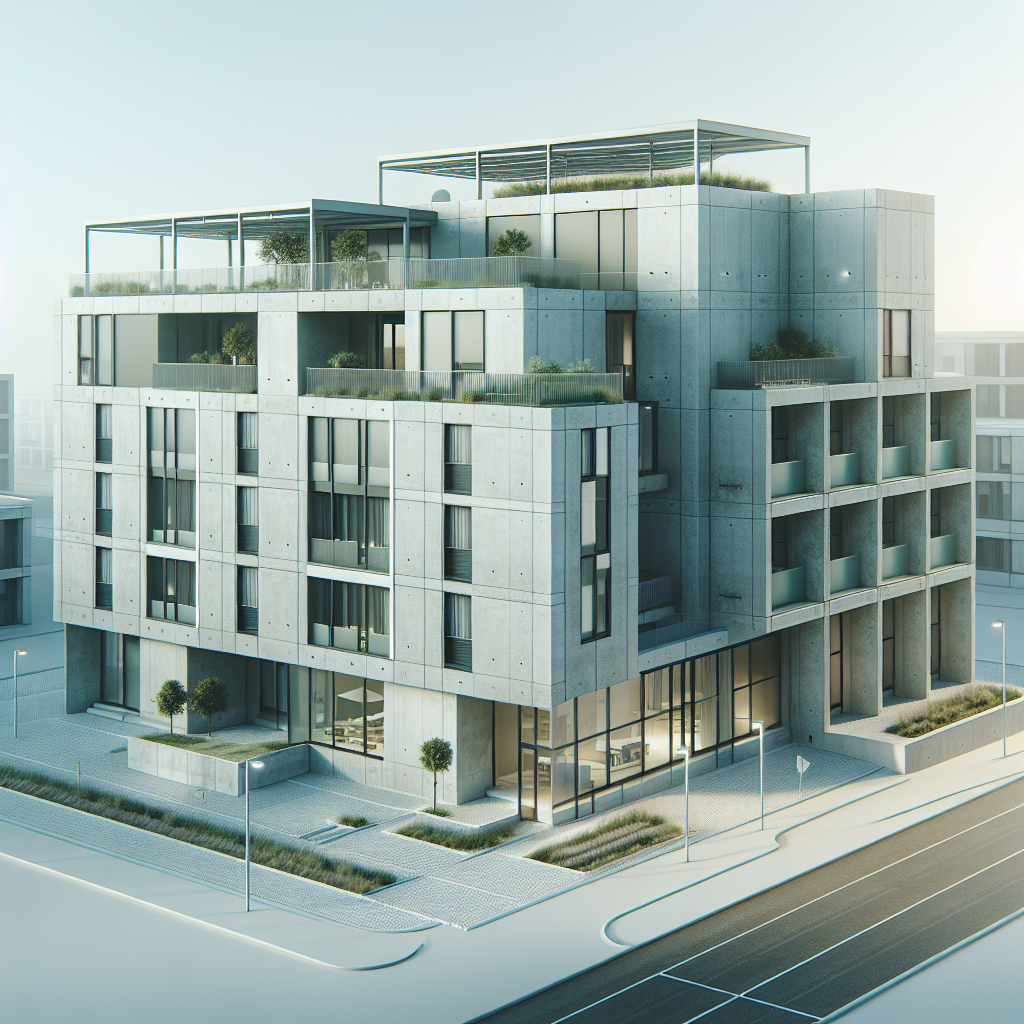
Smart buildings commercial: what decision-makers should understand about the next phase of building performance
Digitalisation is steadily changing how commercial real estate is designed, operated, and experienced. For business owners, investors, and corporate real estate teams, the topic is less about novelty and more about operational discipline: how buildings can use data to run efficiently, remain adaptable, and support long-term sustainability goals.
In this context, smart buildings commercial refers to properties that integrate connected devices, automated controls, and analytics to manage energy, indoor climate, space, and safety in a more responsive way. The shift is increasingly relevant for mixed-use and commercial assets where tenant expectations, regulatory pressure, and operating costs all influence long-term value.
What makes a commercial building “smart” in practice?
A smart commercial building is best understood as an ecosystem: sensors capture real-time information, building systems respond through automation, and analytics help teams make better decisions over time. As CIM describes, smart buildings are evolving from static environments into “dynamic, data-driven ecosystems” that can adapt and learn through integrated systems and software (CIM).
While features differ by asset type and strategy, most smart building programmes rely on three foundational layers:
- Connected infrastructure (IoT sensors and networks that capture occupancy, air quality, temperature, vibration, and more)
- Integrated controls (building and energy management platforms that connect HVAC, lighting, and additional subsystems)
- Analytics and optimisation (software that turns data into insights, identifies anomalies, and supports predictive maintenance)
Ten technologies shaping smart buildings in commercial real estate
The following themes reflect the technologies most commonly associated with smart commercial buildings today, based primarily on CIM’s overview of “Top 10 Technologies to Watch” (CIM). For decision-makers, these categories are useful as a checklist when evaluating acquisitions, development requirements, or retrofit planning.
1) Integrated building and energy management systems (BMS/EMS)
Modern Building Management Systems and Energy Management Systems are increasingly integrated, enabling centralised control and monitoring across HVAC, lighting, plumbing, and security, while tracking energy consumption to identify inefficiencies (CIM). The strategic point is interoperability: systems that support open protocols and multi-vendor environments reduce lock-in risk and simplify future upgrades.
2) Sensor networks and IoT infrastructure
IoT is the data collection layer. CIM notes that today’s sensors capture granular indicators such as humidity, air quality, occupancy, noise, and vibration, not only temperature and motion (CIM). For commercial portfolios, scalable sensor deployment matters because it determines how reliably a building can measure performance and verify improvements over time.
3) Predictive building intelligence and analytics
Analytics platforms aggregate data from BMS/EMS and IoT devices to detect anomalies, forecast operational needs, and support preventive action (CIM). This is where “smart” becomes measurable: insights can translate into reduced downtime, more stable indoor conditions, and better prioritisation of maintenance budgets.
4) Digital twins for simulation and scenario testing
Digital twin approaches allow teams to simulate building performance and test operational changes in a virtual model before applying them in live operations (CIM). For long-term owners, this is particularly relevant when planning refurbishments, energy retrofits, or changes in tenant mix, where operational impacts can be evaluated early.
5) Advanced climate and indoor air quality management
Indoor environmental quality is moving from “comfort” to “health and productivity” as a measurable objective. CIM highlights HVAC systems that adapt using CO2 sensors, weather forecasting, and occupancy data to optimise air exchange and energy use (CIM). SVN Northco similarly emphasises monitoring air quality, filtering pollutants, and regulating CO2 levels as core smart building applications (SVN Northco).
6) Human-centric environmental controls (lighting and comfort personalisation)
Human-centric lighting systems can adjust brightness and colour temperature based on daylight and user needs, supporting circadian patterns and workplace experience objectives (CIM). For many tenants, this is where smart building technology becomes visible: comfort, controllability, and transparency in how spaces respond.
7) Advanced connectivity and edge computing
As device density increases, connectivity becomes critical. CIM points to high-speed wireless (including Wi‑Fi 6 and private 5G) and edge computing that processes data locally to support low-latency decision-making (CIM). For investors, robust connectivity is also a resilience factor: it supports continuity of operations and reduces reliance on single points of failure.
8) Occupant experience platforms
Occupant experience platforms typically provide interfaces (often mobile) for functions such as meeting room booking, comfort adjustments, and visibility into building services (CIM). In commercial settings, these platforms can influence tenant satisfaction, while also generating data that supports operational optimisation.
9) Space utilisation and workplace intelligence
Hybrid work patterns have made utilisation data more valuable. CIM describes using occupancy sensors, booking systems, and related signals to understand how spaces are used and to align cleaning, ventilation, and lighting schedules with real demand (CIM). For owners, the long-term benefit is better-informed capex decisions and more resilient space planning.
10) Security, access control, and cyber resilience
Connected buildings expand the security scope to include both physical and digital risks. CIM notes a shift from keycards toward biometric and mobile credentials, plus the growing importance of cybersecurity as buildings become more connected (CIM). SVN Northco also outlines smart security features such as biometric access control and real-time alerts (SVN Northco).
Practical implications for investors and tenants
Smart building initiatives are often discussed as “technology upgrades,” but the decision criteria are typically financial and operational: risk management, efficiency, and the ability to meet future requirements without disruptive interventions.
Operating cost control through measured performance
Energy and maintenance are major drivers of net operating income. IoT-enabled controls can reduce waste by aligning HVAC and lighting with real occupancy, rather than fixed schedules. Semtech notes that integrating IoT sensors with building-management systems can improve energy efficiency—for example, motion trackers can signal the BMS to switch off HVAC and lights when rooms are unoccupied (Semtech).
From a planning standpoint, the most important point is not any single device but the ability to measure, verify, and continuously improve performance over years.
Asset resilience and maintenance predictability
Predictive approaches aim to reduce downtime and avoid reactive repairs. Semtech highlights that predictive maintenance using IoT devices can track equipment usage and forecast failures, reducing downtime and expensive service visits (Semtech). CIM similarly describes analytics systems that detect anomalies and forecast operational needs (CIM).
Workplace quality and indoor environmental expectations
For many occupiers, building quality is increasingly tied to indoor air quality, comfort stability, and user control. Smart HVAC and air quality monitoring can support healthier environments through demand-based ventilation and better visibility of conditions (CIM; SVN Northco).
This is relevant to leasing resilience: the objective is not “gadgets,” but consistently reliable building conditions that support day-to-day operations.
A long-term perspective: future-proofing, standards, and sustainability infrastructure
For long-term owners and developers, smart building strategy should align with building life cycles. Systems will be replaced and upgraded over time; the goal is to avoid dead ends and expensive reintegration projects.
Interoperability and open integration as a risk control measure
CIM notes that modern management platforms are increasingly interoperable across vendors and support open protocols (CIM). Over a holding period of decades, this reduces dependency on one supplier and makes phased upgrades more realistic.
Cybersecurity as part of operational resilience
As physical systems converge with IT networks, cybersecurity becomes central to safe operations. CIM emphasises cyber resilience as connected buildings expand their threat surface (CIM). For investors and asset managers, governance and oversight matter as much as technology selection: policies, access management, and continuous monitoring should be considered part of building risk management.
Sustainability infrastructure: energy and water systems that support net-zero pathways
Sustainability is a core driver of smart building technology adoption. CIM highlights onsite renewables, microgrids, storage, and smart water management (including leak detection and greywater recycling) as increasingly standard elements in green-certified developments, supporting net-zero strategies and regulatory preparedness (CIM).
For Swiss commercial and mixed-use assets, the long-term value lies in the combination of measured performance, adaptable infrastructure, and credible pathways to reduce operational carbon and resource use.
Conclusion
Smart buildings commercial strategies are increasingly about disciplined operations and long-term asset quality rather than technology for its own sake. Integrated management systems, IoT sensor networks, predictive analytics, and resilient connectivity are reshaping how commercial properties are run, while new expectations around indoor air quality, security, and sustainability infrastructure continue to rise.
For decision-makers, the practical focus is clear: prioritise interoperable systems, treat data as a long-term operational asset, and align smart building investments with life-cycle planning, resilience, and sustainability objectives.