
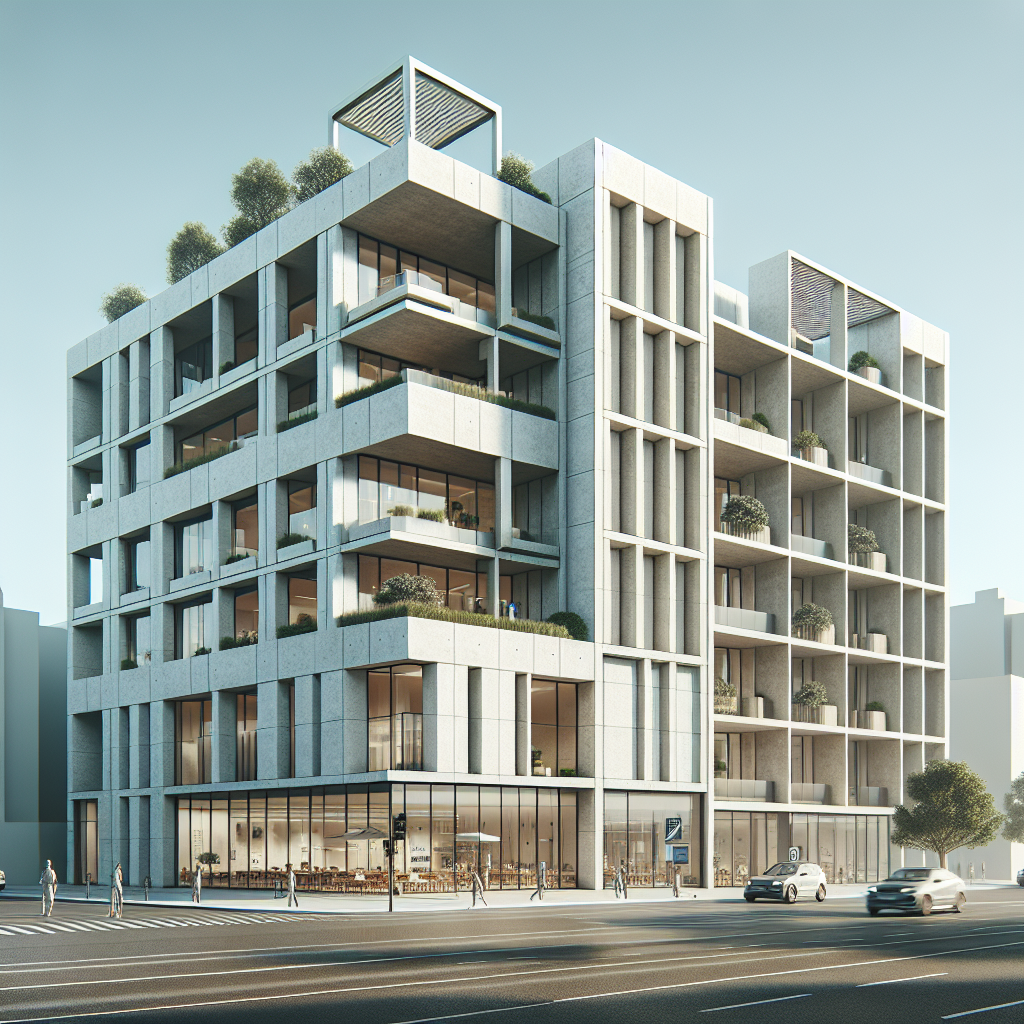
Long-term property investment: building resilient real estate value over time
For business owners, investors, and decision-makers, real estate is often evaluated through a long time horizon: stable income, controlled risk, and assets that remain useful across cycles. In that context, long-term property investment typically refers to acquiring and holding properties over many years to benefit from rental income, gradual value creation, and compounding returns.
Unlike short-term trading approaches, long-term strategies place more weight on durable location fundamentals, tenant demand, ongoing asset stewardship, and financing structures that can withstand changing market conditions. This article outlines the core principles behind long-term property investment, practical considerations, and how a long-term perspective can support portfolio resilience.
What long-term property investment means in practice
Long-term real estate investing is frequently associated with “buy-and-hold” approaches: purchasing a property, operating it (often via leasing), maintaining and improving it, monitoring market trends, and choosing an appropriate time to refinance or sell. Rocket Mortgage describes buy-and-hold real estate investing as a long-term strategy involving purchasing, renting, managing, monitoring trends, and deciding when to sell based on goals and market context (Rocket Mortgage: buy-and-hold real estate).
This framing is useful for both commercial and mixed-use assets, where value is not only a function of market prices but also of operational quality and tenant suitability. Over multi-year periods, outcomes tend to be shaped by a small set of recurring drivers: occupancy, rent sustainability, total operating costs, capex planning, and financing discipline.
Primary return drivers: cash flow, equity, and appreciation
Long-term returns generally come from three sources that interact over time:
- Net operating income (NOI) and cash flow from leases, after accounting for operating costs and reserves.
- Equity build-up through amortization (where applicable) and value creation from targeted improvements.
- Appreciation tied to location fundamentals, demand, inflation dynamics, and the asset’s continued relevance.
A recurring theme across long-term investment guidance is the emphasis on income quality rather than relying solely on price appreciation. For example, High Fidelity Realty highlights the importance of prioritizing cash flow, noting that positive monthly cash flow can help protect investors during downturns, while appreciation is not guaranteed (High Fidelity Realty: long-term investing advice).
Core principles that support long-term outcomes
1) Research the market with a cycle-aware mindset
Successful long-term investing starts with disciplined market research: understanding demand drivers, local supply pipelines, employment and infrastructure dynamics, and tenant preferences. High Fidelity Realty positions thorough market research as a foundation for real estate investment decisions, including property cycles and location-specific factors (High Fidelity Realty).
For decision-makers, cycle awareness is less about timing a “perfect entry” and more about stress-testing assumptions: How would occupancy and achievable rent behave under weaker conditions? Which tenant segments remain stable? What re-letting costs might rise during a slowdown?
2) Use financing that remains sustainable under pressure
Debt can magnify returns, but it can also amplify risk if cash flow weakens or interest rates change. High Fidelity Realty underlines that smart financing is not simply obtaining a mortgage, but selecting terms that protect investors during downturns and maintaining prudent debt levels so property cash flow can cover debt service (High Fidelity Realty: smart financing and debt management).
From a long-term property investment perspective, financing strategy should align with lease profiles, asset lifecycle capex, and liquidity planning. The goal is typically to avoid forced decisions during unfavorable markets.
3) Plan for full-life costs, not just acquisition price
Long-term performance depends heavily on what happens after acquisition. Maintenance, compliance, renewals, building systems, and periodic reinvestment can materially affect NOI and tenant satisfaction. High Fidelity Realty explicitly recommends factoring in all costs, including maintenance and management fees, and budgeting for unexpected repairs to protect cash flow (High Fidelity Realty: factor in all costs).
This is particularly relevant for commercial and mixed-use properties, where technical systems and tenant-specific fit-outs may influence both near-term costs and future re-letting flexibility.
4) Diversify to reduce concentration risk
Diversification can mean different things: geography, tenant industries, lease durations, or asset types. High Fidelity Realty notes that owning different property types or locations can help investors weather shifts when one segment slows and another remains stable (High Fidelity Realty: diversification).
From a portfolio construction standpoint, diversification is less about holding many assets and more about avoiding single-point failures. Over time, concentration in one tenant category or micro-market can create avoidable volatility.
5) Adopt a “buy and hold” approach with clear decision rules
“Buy and hold” is widely viewed as a cornerstone of long-term property investment. NAB describes a buy-and-hold strategy as purchasing a well-located property, renting it, and holding it for the long haul, aiming to build wealth through capital growth while rental income covers expenses (NAB: buy and hold strategy).
Rocket Mortgage similarly notes that holding long term can generate rental income while building equity and riding out short-term fluctuations (Rocket Mortgage).
For institutional and business investors, “hold” does not mean “do nothing.” It generally implies active asset management: leasing strategy, tenant retention, capex planning, and periodic reassessment against investment objectives.
Practical implications for investors and decision-makers
Operational capability matters as much as acquisition
Long-term property investment can be undermined by avoidable execution issues: inadequate budgeting, reactive maintenance, or misaligned tenant mix. Temple View Capital notes that long-term rental success depends on careful planning and management, including maintenance planning and, where relevant, considering professional property management to handle tenant screening, rent collection, and ongoing upkeep (Temple View Capital: long-term rentals guide).
Even in commercial contexts where tenant structures differ, the principle remains: stable outcomes often correlate with disciplined operations and predictable service levels.
Cash flow conservatism improves resilience
Long-term investors commonly evaluate downside scenarios: vacancy periods, re-letting incentives, operating cost inflation, and capex timing. A cash-flow-first lens supports this discipline. High Fidelity Realty’s guidance to prioritize cash flow over relying purely on appreciation reflects a broader risk management mindset (High Fidelity Realty).
For business owners using property as part of a broader corporate strategy, conservative underwriting can also reduce the likelihood that real estate decisions disrupt core operations during adverse conditions.
Strategy should match objectives and risk tolerance
Long-term investing is not one-size-fits-all. Farther emphasizes defining short-term and long-term objectives and assessing risk tolerance as a foundation for real estate decisions (Farther: defining objectives and risk tolerance).
For example, some investors prioritize inflation-linked income stability, while others focus on long-run capital preservation and asset quality. The most consistent results tend to appear when acquisition criteria, financing, and asset management align with those objectives from the start.
Long-term perspective: compounding, adaptability, and sustainable relevance
A long holding period changes the nature of decision-making. Instead of optimizing for short-term price movements, the focus shifts to durability: buildings that remain functional, efficient, and desirable for tenants over time.
High Fidelity Realty notes that patience and consistency can allow investors to benefit from compounding growth, appreciation, and steady cash flow over time (High Fidelity Realty: think long term).
At the same time, long-term ownership requires adaptability. Tenant needs evolve, regulations change, and sustainability expectations rise. Farther highlights sustainability and technology as notable market trends, including eco-friendly properties and digital infrastructure real estate (Farther: market trends). For commercial and mixed-use properties, maintaining relevance may involve periodic upgrades, energy-performance improvements, and flexible space concepts that support changing occupier demand.
Conclusion
Long-term property investment is fundamentally an approach to building resilient value: acquiring assets with durable demand, underwriting them with conservative cash flow assumptions, financing them prudently, and managing them actively over many years.
Across the research, several themes recur: do thorough market research, prioritize cash flow, diversify to mitigate risk, account for full-life operating and maintenance costs, and maintain a patient, long-term mindset (High Fidelity Realty; NAB; Rocket Mortgage). For business owners and investors, applying these principles can help position real estate holdings to remain stable, relevant, and financially sustainable across property cycles.